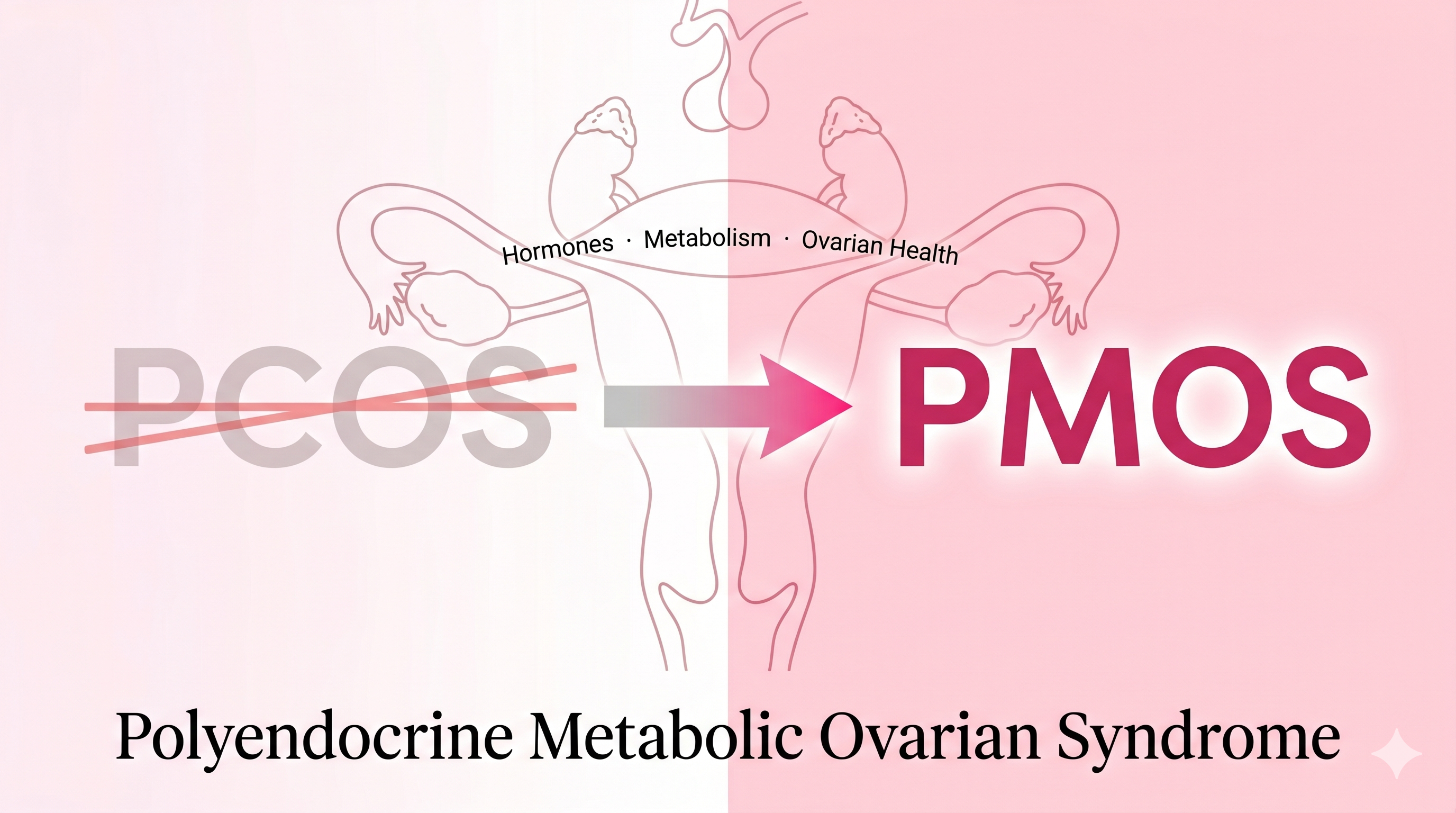
PCOS Is Now Called PMOS — What Changed, Why It Matters & What You Need to Know (2026)
PCOS Is Now PMOS — Everything You Need to Know | thebiologyislove.com
🔥 Breaking — May 2026Published in The LancetWomen’s Health
PCOS Is Now Called PMOS — The Name Change That Changes Everything
After 11 years, 22,000 stakeholders, and a landmark global consensus, polycystic ovary syndrome has a new name: Polyendocrine Metabolic Ovarian Syndrome (PMOS). Here is everything you need to understand — and why it matters.
On May 12, 2026, a landmark global consensus paper published in The Lancet officially announced that Polycystic Ovary Syndrome (PCOS) would henceforth be known as Polyendocrine Metabolic Ovarian Syndrome (PMOS). More than 50 leading academic, clinical, and patient organisations worldwide endorsed the change — including the Endocrine Society.
The old name was not just outdated — it was actively misleading. Here is exactly what was wrong with it:
🚫
“Polycystic” Was a Lie
There are no actual cysts in the ovaries. What appear on ultrasound are follicles — immature egg-containing sacs that fail to mature properly. Calling them cysts led to decades of confusion.
🔬
It Is Not Just an Ovary Problem
PMOS involves the endocrine system, metabolic health, skin, mental health, and the reproductive system — it is a complex multi-system disorder, not a simple ovarian condition.
⏳
Delayed Diagnoses
Because the name focused on ovaries and “cysts,” doctors and patients missed the hormonal and metabolic dimensions — leading to years of delayed or missed diagnoses.
😔
Stigma & Shame
The old name contributed to stigma, particularly around weight and fertility. A more accurate name enables better conversation, empathy, and care.
💬 Key Quote
“Renaming this condition is more than semantics; it’s about finally recognizing the full reality of what patients experience.” — Dr. Melanie Cree, University of Colorado Anschutz
02 — Definition
What Exactly Is PMOS?
Polyendocrine Metabolic Ovarian Syndrome (PMOS) is a complex, long-term hormonal and metabolic condition affecting 1 in 8 women of reproductive age worldwide. The name itself is now a mini-lesson in biology — let us decode it:
Word in Name
What It Means
Why It Matters
Poly-
Multiple / Many
Multiple hormones and systems are involved
Endocrine
Relating to hormones & glands
The core problem is hormonal dysregulation
Metabolic
Relating to metabolism
Insulin resistance, obesity risk, and type 2 diabetes risk are central features
Ovarian
Relating to the ovaries
Ovaries are affected — irregular ovulation, androgen excess
Syndrome
A cluster of symptoms
Not a single disease — a group of features that occur together
💡 Mnemonic — Remember PMOS
“Pretty Much Ovaries Suffering… but actually, the whole body”
Poly-endocrine — many hormones · Metabolic — insulin, glucose, weight · Ovarian — egg release disrupted · Syndrome — it is a cluster, not one disease. The mnemonic reminds you that while it used to be seen as an “ovary problem,” the reality is system-wide.
03 — Clinical Features
Symptoms of PMOS — The Full Picture
PMOS does not look the same in every person. It is a heterogeneous syndrome — meaning not all symptoms appear in all patients, which is another reason the old name caused so much confusion and missed diagnosis.
Reproductive & Hormonal Symptoms
🔄
Irregular Periods
Oligomenorrhoea (infrequent cycles) or amenorrhoea (absent periods) due to disrupted ovulation.
🧪
Hyperandrogenism
Excess male hormones (androgens like testosterone) leading to acne, oily skin, and hirsutism.
🍃
Hirsutism
Unwanted hair growth on face, chest, back — caused by elevated androgen levels.
👶
Fertility Issues
Anovulation (failure to ovulate) is the primary cause of PMOS-related infertility.
Metabolic Symptoms
🩸
Insulin Resistance
Cells do not respond normally to insulin → elevated blood sugar, increased risk of Type 2 Diabetes.
⚖️
Weight Gain / Obesity
Metabolic disruption leads to difficulty managing weight, particularly central adiposity.
❤️
Cardiovascular Risk
Elevated risk of high blood pressure, dyslipidaemia, and heart disease over time.
😴
Fatigue
Metabolic and hormonal imbalances cause persistent tiredness, often overlooked clinically.
Skin & Other Symptoms
🌑
Acanthosis Nigricans
Dark, velvety patches of skin around the neck and armpits — a hallmark sign of insulin resistance.
💆
Mental Health
Higher rates of anxiety, depression, and body-image issues — recognised features of PMOS.
🪮
Hair Thinning
Androgenic alopecia — male-pattern hair thinning on the scalp from elevated androgens.
⚠️ Did You Know?
Up to 70% of PMOS cases remain undiagnosed globally. The misleading name “PCOS” was a key contributor — people and doctors looked for cysts rather than the full hormonal and metabolic picture.
04 — Pathophysiology
Causes & Biology Behind PMOS
PMOS does not have a single cause. It arises from a complex interplay of genetic predisposition, hormonal dysregulation, insulin resistance, and environmental factors.
The Hormonal Core
At its heart, PMOS is driven by a disruption in the hypothalamic-pituitary-ovarian (HPO) axis. The pituitary gland releases an excess of LH (Luteinising Hormone) relative to FSH (Follicle Stimulating Hormone). This imbalance drives the theca cells of the ovary to overproduce androgens (particularly testosterone and androstenedione), while follicle development stalls — leading to the characteristic appearance of multiple small follicles on ultrasound.
Insulin Resistance — The Metabolic Engine
Insulin resistance is present in approximately 70% of PMOS patients, regardless of body weight. When cells resist insulin, the pancreas produces more of it. This hyperinsulinaemia further stimulates androgen production in the ovary, creating a vicious cycle. This is precisely why the new name specifically includes the word “Metabolic” — it is not an afterthought; it is a defining feature.
🔗 The PMOS Vicious Cycle
Insulin resistance → Hyperinsulinaemia → ↑ Androgen production by ovaries → Disrupted follicle maturation → Anovulation → Irregular periods → ↑ LH:FSH ratio → Back to androgen excess. The cycle sustains itself.
Genetic Factors
PMOS has a significant hereditary component. First-degree relatives of affected individuals have a higher risk. Several genes involved in insulin signalling, steroid hormone synthesis, and gonadotrophin regulation have been implicated, though no single “PMOS gene” has been identified. It is a polygenic, multifactorial condition.
05 — Diagnosis
How Is PMOS Diagnosed?
The diagnostic framework largely follows the existing Rotterdam Criteria, which requires at least 2 out of 3 of the following features. The name change does not immediately overhaul the criteria, but updated clinical guidelines are expected to follow.
Clinical (acne, hirsutism) or biochemical (elevated testosterone)
Blood test for total and free testosterone, DHEA-S
Polycystic Ovarian Morphology
≥20 follicles per ovary or ovarian volume >10 mL on ultrasound
Pelvic/transvaginal ultrasound
❗ Important — Other Conditions Must Be Ruled Out
PMOS is a diagnosis of exclusion. Before confirming PMOS, clinicians must rule out thyroid disorders, congenital adrenal hyperplasia, hyperprolactinaemia, and androgen-secreting tumours — all of which can mimic PMOS symptoms.
Additional Tests Often Done
A thorough PMOS workup also includes fasting glucose and insulin levels (to assess insulin resistance), lipid profile (cardiovascular risk), AMH (Anti-Müllerian Hormone) — which is typically elevated in PMOS — and a mental health assessment, now recognised as a standard part of holistic PMOS care.
06 — Management
Treatment & Management of PMOS
PMOS currently has no cure, but it is highly manageable. Treatment is tailored to the individual’s symptoms and goals — whether that is regulating cycles, managing metabolic risk, addressing skin issues, or supporting fertility.
Lifestyle — The First-Line Treatment
Even a modest weight reduction of 5–10% of body weight can restore ovulation, improve insulin sensitivity, and reduce androgen levels in women who are overweight. A balanced diet, regular physical activity, and stress management are not just supportive — they are primary interventions.
Medications
💊
Combined Oral Contraceptive Pill
Regulates menstrual cycles, reduces androgen levels, and manages acne and hirsutism.
🩺
Metformin
Improves insulin sensitivity; often used in PMOS with metabolic features. Also supports ovulation induction.
🌱
Letrozole / Clomiphene
Used for ovulation induction in women trying to conceive. Letrozole is now preferred over clomiphene.
🧴
Anti-Androgens
Spironolactone or cyproterone acetate to manage hirsutism, acne, and hair thinning from androgen excess.
✅ The PMOS Treatment Goal Is Whole-Body Care
The rename to PMOS signals a shift: treatment should not just focus on the ovaries or menstrual cycle. It must address metabolic health, mental wellbeing, cardiovascular risk, and dermatological symptoms — holistically, across a lifetime.
07 — History
The Journey: From PCOS to PMOS
1
1935
Stein-Leventhal Syndrome — First described by Drs. Stein and Leventhal. Characterised by enlarged, cyst-like ovaries, irregular periods, and excess hair growth.
2
1990
NIH Consensus Criteria — First formal diagnostic criteria defined: anovulation + hyperandrogenism. The ovary-centric view becomes entrenched in medicine.
3
2003
Rotterdam Criteria — Broadened diagnosis to include ultrasound morphology. Now 2 of 3 criteria required. Still called “polycystic ovary syndrome.”
4
2017
First Renaming Survey — Led by Prof. Helena Teede (Monash University). Initial global survey of patients and clinicians reveals widespread dissatisfaction with the name.
5
2023–2025
Global Consultation — Second and third surveys. Nearly 22,000 stakeholders across the globe — doctors, patients, researchers, charities — consulted. Candidate names tested in international workshops.
6
May 12, 2026
PMOS Is Born — The name Polyendocrine Metabolic Ovarian Syndrome (PMOS) is published in The Lancet as the official new name. Endorsed by 50+ global organisations. The most rigorous disease-renaming process in medical history is complete.
08 — Significance
Why This Rename Is a Landmark Moment in Biology & Medicine
It is tempting to think of this as just a name change. It is not. Here is why the PCOS → PMOS transition is genuinely significant:
🔬 Scientific Accuracy Finally Matches the Disease
The new name encodes the biology correctly: poly (multiple) + endocrine (hormonal) + metabolic + ovarian. Any biology or medical student reading the name will now understand the condition’s true scope before even reading a textbook.
🌍 Consistent Global Adoption
Clinical guidelines, medical education curricula, and international disease classification systems (including ICD codes) will all be updated. This ensures that PMOS is taught, coded, and treated consistently worldwide — reducing the diagnosis gap.
📚 Research Will Accelerate
With a name that reflects the multi-system nature of the condition, research funding and study design will no longer be artificially constrained to “ovary research.” Endocrinology, cardiology, metabolic medicine, and mental health research will all intersect with PMOS more naturally.
💚 170 Million Women Will Be Seen Differently
“What makes this effort especially powerful is that it reflects the voices of thousands of patients and clinicians from around the world.” — University of Colorado Anschutz. The rename is a statement: this condition is real, complex, serious, and deserves whole-person care.
📖 Read the Original Sources
We believe in transparent, source-backed science. Here are the key publications and organisations behind this landmark rename — read them directly:
Old name: Polycystic Ovary Syndrome (PCOS) · New name: Polyendocrine Metabolic Ovarian Syndrome (PMOS) · Published: May 12, 2026 · Journal: The Lancet · Lead researcher: Prof. Helena Teede, Monash University · 50+ global organisations endorsed it · 22,000 stakeholders consulted over 11 years.
🩺 PMOS at a Glance
Affects 1 in 8 women · 170 million worldwide · 70% undiagnosed · Core features: hormonal dysregulation (↑androgens), insulin resistance, metabolic dysfunction · Diagnosed via Rotterdam Criteria (2 of 3: anovulation, hyperandrogenism, ovarian morphology) · NOT just an ovary disease.
⚡ Why the Old Name Was Wrong
1) No actual cysts — they are follicles. 2) Not just ovaries — whole endocrine system involved. 3) Metabolic features (insulin resistance, T2DM risk) were being ignored. 4) Led to misdiagnosis, stigma, and delayed treatment.
Poly-endocrine — multiple hormone systems involved Metabolic — insulin resistance and metabolic syndrome risk Ovarian — egg follicles stall, ovulation disrupted Syndrome — a cluster of symptoms, not one disease
And yes — it IS obviously serious. 1 in 8 women. 170 million people. Time the world took notice.
10 — Practice Questions
🧠 Test Yourself — PMOS MCQs
New 2026Name Change
Q1. What does PMOS stand for?
✅ B — Polyendocrine Metabolic Ovarian Syndrome. Published in The Lancet on May 12, 2026. The key words are POLYENDOCRINE (multiple hormones/glands), METABOLIC (insulin resistance, diabetes risk), and OVARIAN (follicle and ovulation disruption). “Polycystic” was dropped because there are no true cysts — only stalled follicles.
PathophysiologyCore Concept
Q2. The “cysts” seen on ultrasound in PMOS are actually:
✅ C — Immature follicles that failed to mature. This is the single most important reason the name was changed. What ultrasound shows are antral follicles that stalled in development — NOT true pathological cysts. Calling them “cysts” for 90 years caused immense diagnostic and therapeutic confusion.
EpidemiologyStatistics
Q3. Approximately what proportion of women worldwide are affected by PMOS?
✅ C — 1 in 8. PMOS affects approximately 1 in 8 women, totalling over 170 million people worldwide. Despite this enormous prevalence, up to 70% of cases remain undiagnosed — a crisis the new name and updated guidelines aim to address.
PathophysiologyHormones
Q4. Which hormonal imbalance is most central to PMOS pathophysiology?
✅ B — High LH:FSH ratio with androgen excess. In PMOS, the pituitary secretes excess LH relative to FSH. This drives ovarian theca cells to overproduce androgens (testosterone, androstenedione). The follicles cannot mature properly, ovulation fails, and the cycle perpetuates. Insulin resistance amplifies androgen production further.
TreatmentManagement
Q5. Which of the following is considered first-line treatment for PMOS in overweight patients?
✅ C — Lifestyle modification. A 5–10% reduction in body weight can restore ovulation, improve insulin sensitivity, and reduce androgen levels. Lifestyle intervention is always the first-line recommendation before pharmacological treatment is initiated. It addresses the metabolic core of PMOS — reinforcing why the “M” in PMOS matters so much.